
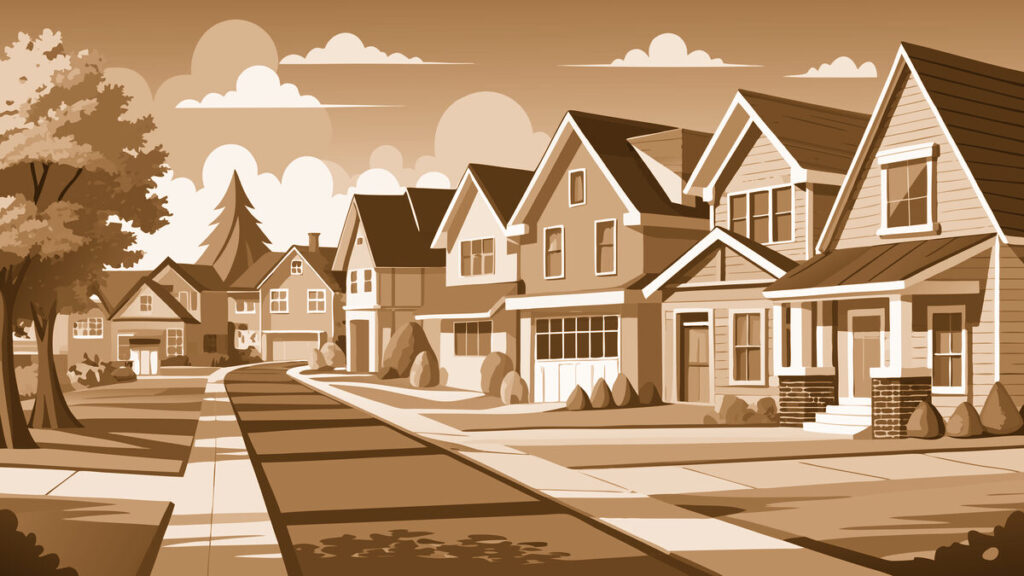
A Neighborhood with a Strongsville Story
Echo Lake Village is one of those Strongsville neighborhoods that feels established without feeling frozen in time. Its streets are familiar gathering places, its homes reflect several decades of suburban architecture, and its sidewalks connect neighbors to the small amenities that make daily life comfortable. Located near Pearl Road, or State Route 42, Echo Lake Village is part of the broader story of Strongsville’s transformation from a largely rural township into a thriving Cleveland suburb.
The neighborhood’s heritage is not centered on a single historic farmhouse or century-old commercial building. Instead, it is found in the evolution of the land itself: from open acreage and working farms to carefully planned residential streets, schools, recreation areas, and family homes. That transition mirrors Strongsville’s larger history, particularly the growth that followed the construction of the Ohio Turnpike in the 1950s.
Before Echo Lake Village
Long before Echo Lake Village was platted, Strongsville was shaped by farms, wooded parcels, small businesses, and roads that connected local families to neighboring communities. Pearl Road served as one of the area’s important north-south routes, linking Strongsville with Berea, Cleveland, and communities farther south.
Strongsville’s modern development accelerated during the middle decades of the twentieth century. The Ohio Turnpike opened new possibilities for commuters, making it easier for residents to live in a quieter suburban setting while working in Cleveland or elsewhere in the region. Developers began purchasing large parcels of land, and subdivisions gradually filled in areas that had once been agricultural.
Echo Lake Village belongs to that postwar and late-twentieth-century wave of growth. The neighborhood’s layout reflects the planning ideals of the era: curving residential streets, cul-de-sacs, sidewalks, landscaped yards, and homes set back from the road. Rather than following the rigid grid of an older town center, its streets were designed to reduce through traffic and create a more peaceful residential environment.
How Echo Lake Village Got Its Name
The name “Echo Lake Village” appears to have been chosen as a development identity rather than inherited from one of Strongsville’s oldest historic place names. Public records document the neighborhood through subdivision plats and later phases, while nearby streets such as Echo Drive and Misty Lake Drive reinforce the water-inspired theme.
The name likely reflects the appeal of lakeside imagery in suburban planning. During the late twentieth century, names such as Lake, Village, Woods, Glen, and Estates were commonly used to suggest natural beauty, privacy, and a close-knit setting. In Echo Lake Village, the name helps establish a sense of place even for residents who know the neighborhood more through its streets, recreation facilities, and familiar neighbors than through a prominent natural lake.
That naming tradition is still visible today. Echo Drive gives the community its most direct connection to the neighborhood name, while other nearby streets and landscape features contribute to the feeling of a planned residential village.
Development in Phases
Echo Lake Village developed gradually rather than appearing all at once. Strongsville’s municipal records show the city accepting subdivision plats connected with Echo Lake Village beginning in the late 1980s. Phase 1 was recorded in 1988, followed by additional planning and plat activity in the early 1990s. A later record identifies Echo Lake Village Subdivision Phase 4 in 1992.
Those dates help place the neighborhood in context. Many of the homes were built during a period when Strongsville was expanding rapidly, yet the community retained enough open land for developers to create a suburban setting with common amenities. Public property records identify homes in the neighborhood dating from the late 1980s and early 1990s, including Colonial-style houses and other designs popular with families during that era.
The broader Echo Lake development also included townhome and apartment components. Municipal records from the late 1980s and early 1990s refer to Echo Lake Village Apartments and Echo Lake Townhomes, showing that the area was planned as more than a single collection of detached houses. This variety contributed to the neighborhood’s long-term stability by bringing together different types of residents and housing choices.
Streets, Recreation, and Everyday Landmarks
For residents, Echo Lake Village is experienced through its streets. Echo Drive acts as a recognizable entrance from Pearl Road, while streets such as Stoughton Drive and Woodshire Drive help form the residential fabric of the community. The streets are lined with mature trees and a mix of homes that show how the neighborhood has aged gracefully over time.
One of the most important landmarks is not a historic structure but the neighborhood’s recreational space. Property information associated with Echo Lake Village lists amenities including a playground, sidewalks, tennis courts, and a swimming pool. These facilities have helped make the neighborhood feel like a community rather than simply a collection of private lots.
For many families, the pool and courts became part of the rhythm of summer. Children could meet friends without leaving the neighborhood, while adults gathered during swim hours, association events, or casual evening walks. These shared spaces are often where a subdivision’s real history is created—through birthday parties, first bike rides, neighborhood games, and years of familiar faces.
Muraski Elementary School is another important institution connected to Echo Lake Village. Strongsville school district documents identify Echo Lake Village as a neighborhood served by Muraski Elementary. The school connection gives the community a natural family focus and helps tie the subdivision to Strongsville’s broader network of neighborhood schools.
How the Neighborhood Has Changed
When the first homes were being built, Echo Lake Village represented a newer generation of Strongsville suburbia. Today, those homes have developed their own history. Original owners have renovated kitchens, replaced roofs, landscaped yards, and watched young children grow up and move away. In many cases, the next generation of buyers has brought fresh energy while preserving the neighborhood’s established character.
The landscape has changed, too. Trees planted when the streets were new have matured, creating shade and a more settled appearance. Sidewalks that once seemed especially new now connect homes that have hosted decades of everyday life. The neighborhood’s amenities have required maintenance and adaptation, but their continued presence reflects the value residents place on shared spaces.
Echo Lake Village has also benefited from Strongsville’s continued growth around it. Pearl Road remains a major local corridor, providing access to shopping, restaurants, services, and connections throughout the city. At the same time, the neighborhood remains tucked away from the busiest traffic, offering the balance that attracted families there in the first place.
A Heritage Made by Residents
The heritage of Echo Lake Village is ultimately a living one. It is found in the records of plats and phases, but also in the memories residents have built over the decades. It is the familiar turn onto Echo Drive, the sound of summer activity near the pool, the walk to a neighbor’s house, and the changing seasons along Stoughton and Woodshire drives.
Echo Lake Village may not have a traditional historic district or a landmark building recognized across Northeast Ohio. Its importance is more personal and local. It represents the way Strongsville grew thoughtfully during the late twentieth century, creating neighborhoods where families could put down roots while remaining close to the region’s major roads, schools, parks, and services.
That combination of planning, recreation, and neighborly familiarity is what makes Echo Lake Village special. Its history is still being written—not in grand monuments, but in the homes, streets, and shared memories that continue to give this Strongsville neighborhood its sense of belonging.